

Orchestral Suite no. 1, in c minor, op. 9
0,00 €
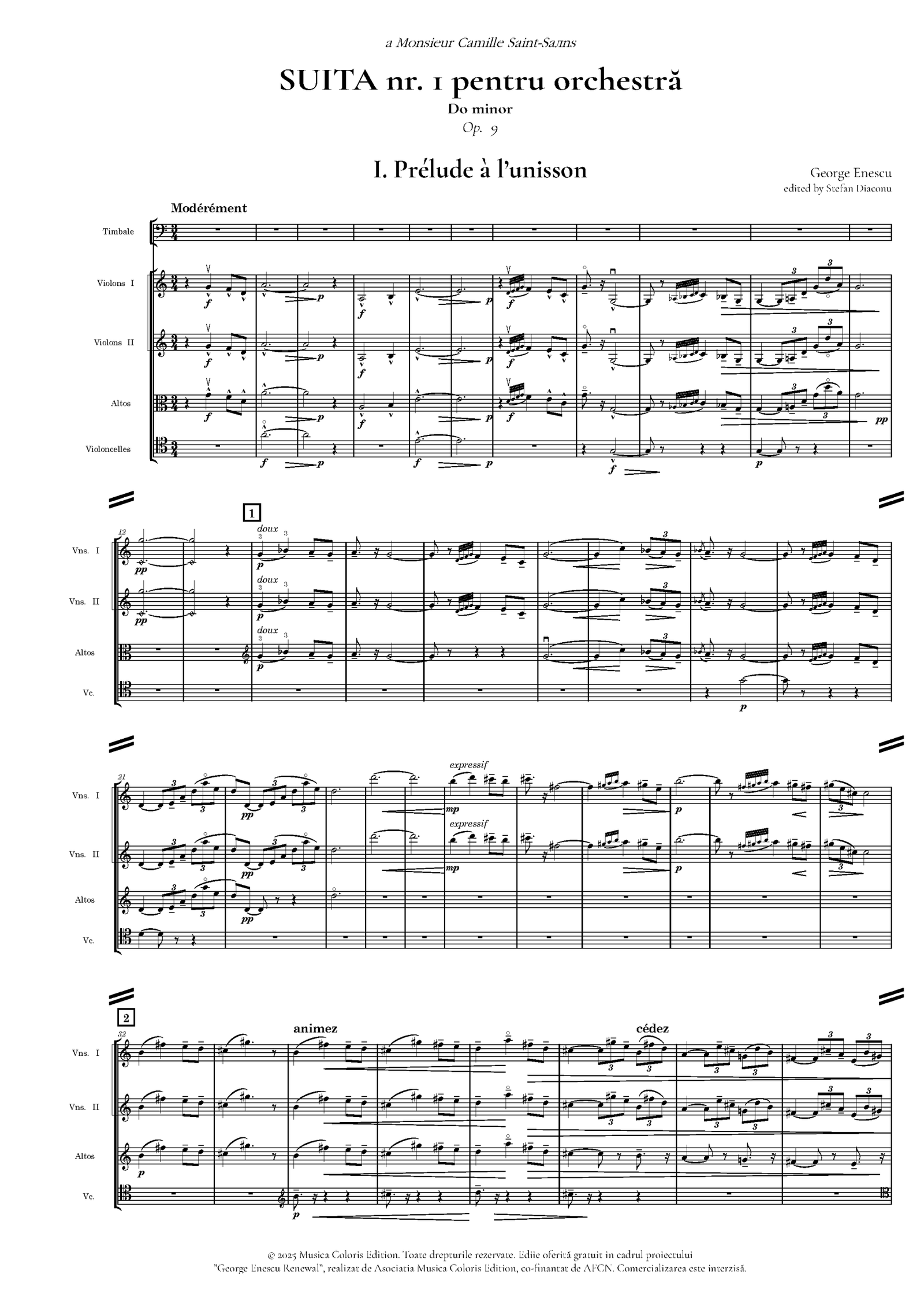
- The first modern Urtext edition, based on the final versions of Enescu’s revised manuscripts
- Orchestral parts in a large format (9 × 12 inch) with practical page turns
- Score in large format – A3
- Foreword detailing the origins of the composition, its premiere, and an analysis of the musical material by Vlad Văidean, a musicologist with expertise in the works of George Enescu (English, French, Romanian)
- In accordance with the original score, the expressive and performance technique markings are written in French
- Percussion parts reorganised in a clear and easy to perform manner
- Transposed C Trumpet voice from F Trumpet in the original score
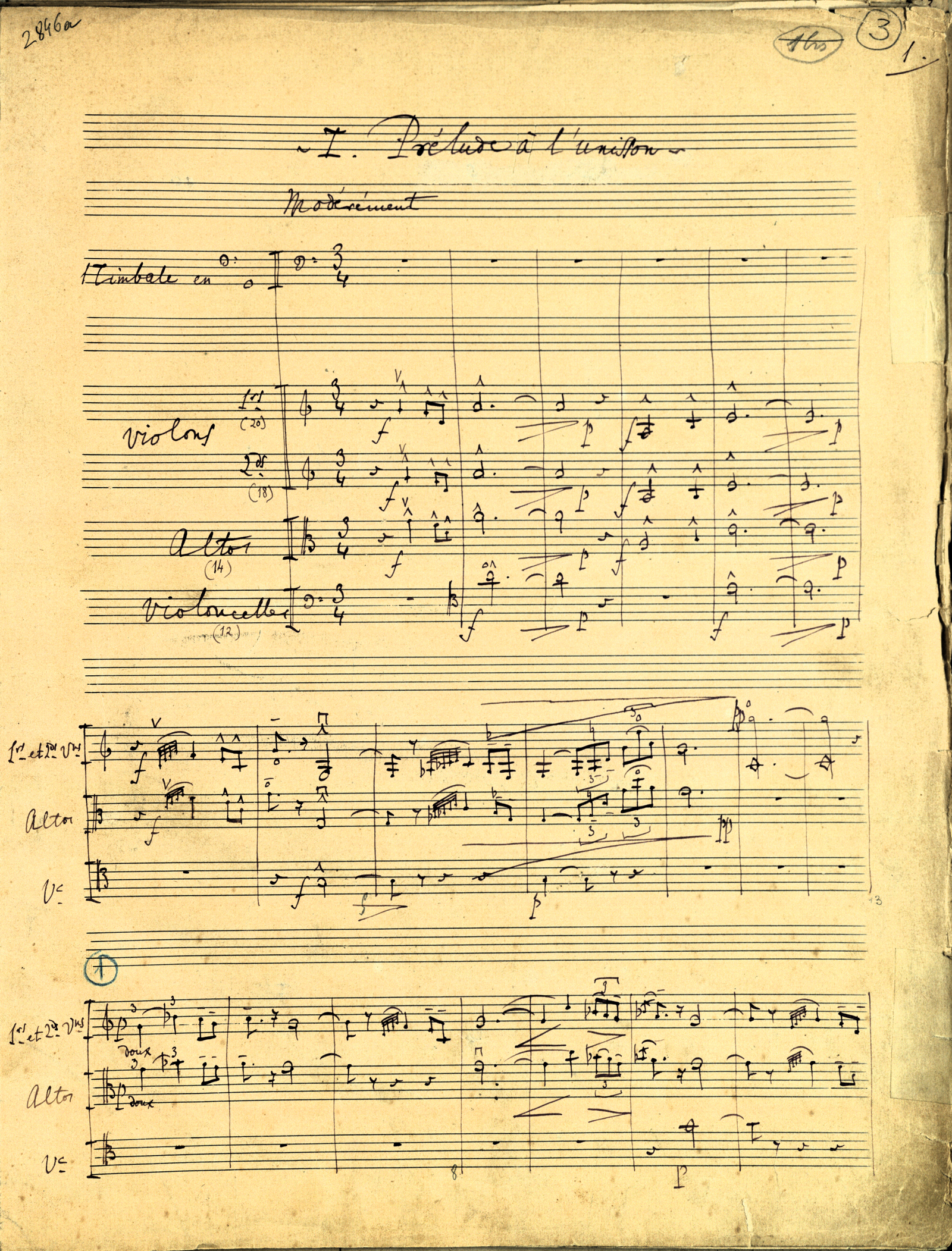
Explore the score history
George Enescu’s three major symphonies with opus numbers—Op. 13, Op. 17, and Op. 21—form a symbolic “trilogy,” composed within a relatively short time span and sharing a three-part structure inspired by César Franck’s model. They belong to the fin-de-siècle Romantic tradition, which Enescu explored on increasingly expansive scales with growing technical and expressive sophistication. In contrast, his three orchestral suites (Op. 9, Op. 20, and Op. 27) do not follow a unified stylistic line but reflect different stages of his creative evolution. Their originality is more immediately perceptible, being closer to folk sources and less concerned with thematic unity. The suites stand out for their timbral diversity and their tendency to shape distinct identities for each movement. In Op. 20, Enescu even anticipates, in a modern way, the revival of Baroque dance forms.
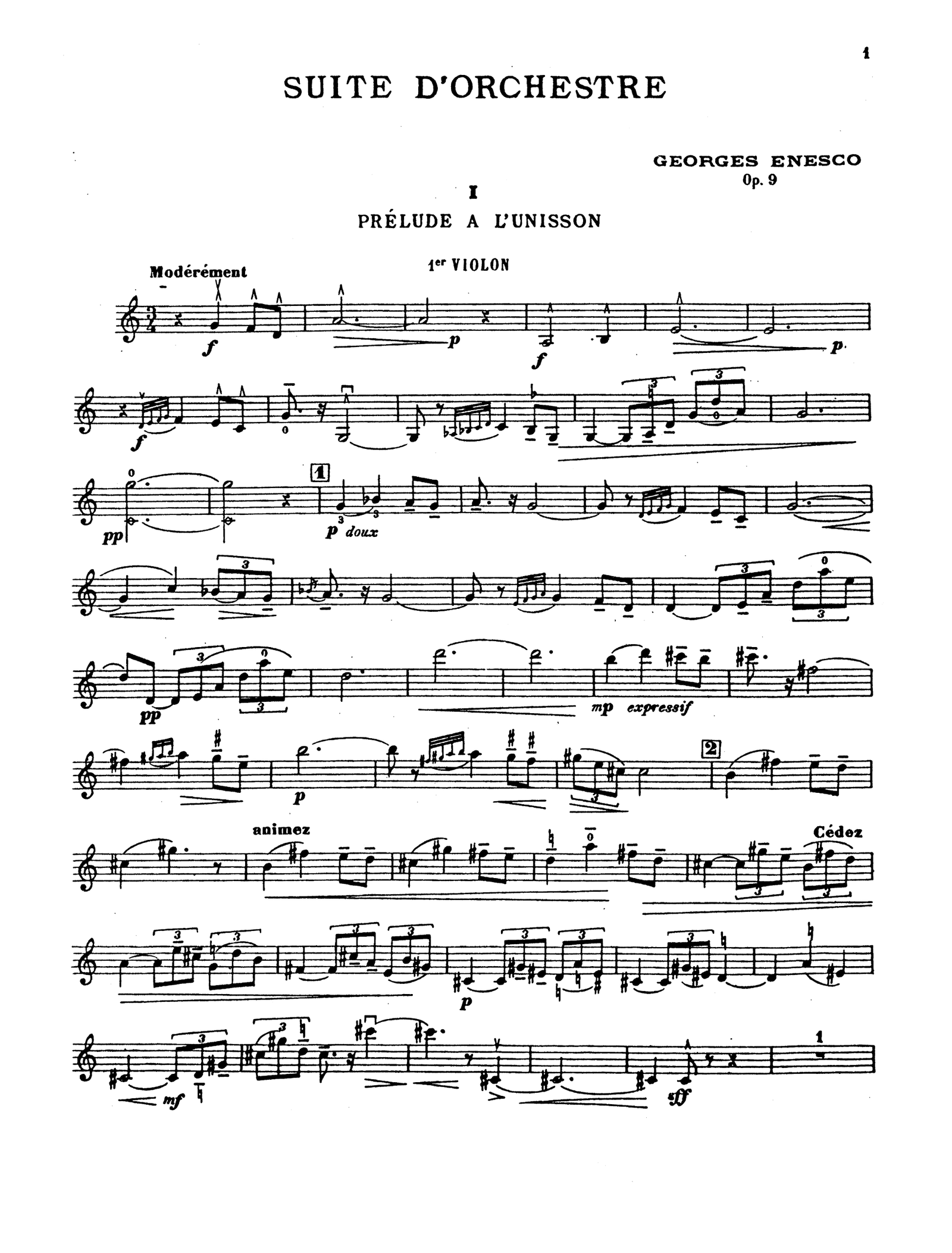
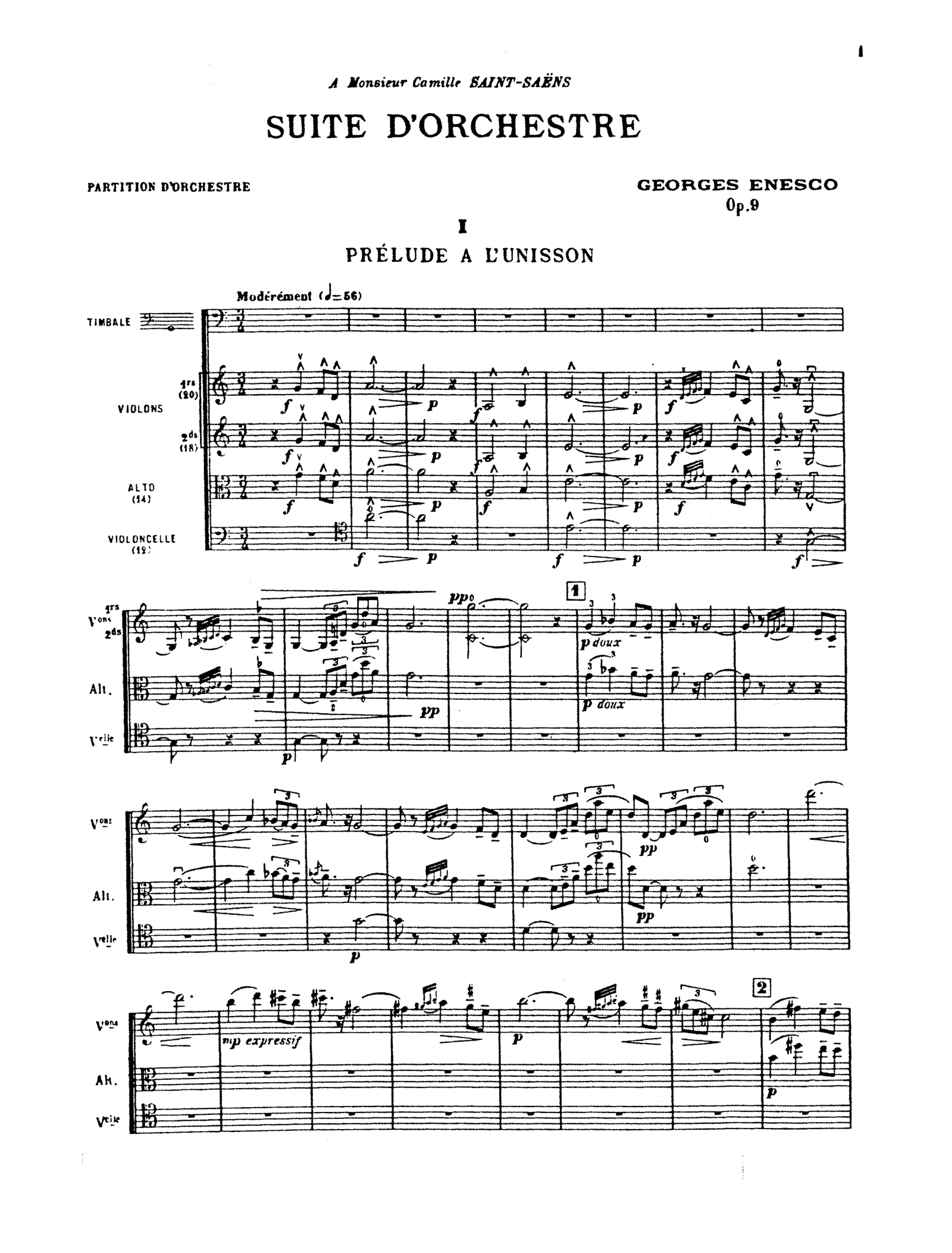
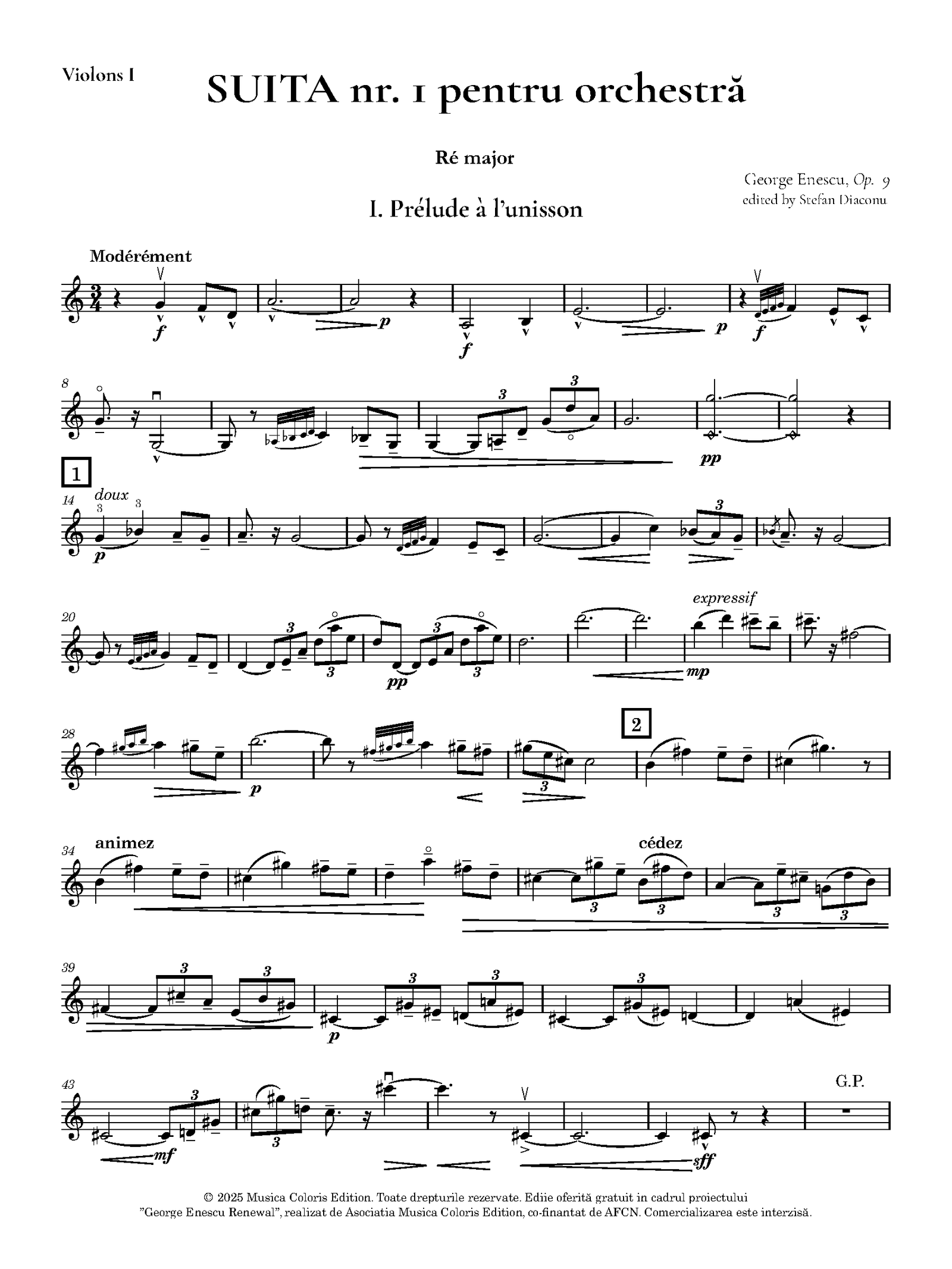
Particularly, the Prelude in Unison from Suite No. 1, Op. 9, stands out for its unique sonic atmosphere, evoking both Baroque techniques like Fortspinnung and the Romantic lyricism of Wagner’s “infinite melody.” Its structure is based on the organic development of a few elementary motivic cells, unfolding in a melodic flow that feels like a single breath of spontaneous improvisation. The exclusive use of strings, which evokes a giant violin, recalls Bach’s writing for solo instruments. More profoundly, this movement reflects a synthesis between scholarly sources and the expressiveness of the Romanian doina, a traditional lyrical genre that Enescu explored throughout his career. Through the Prelude in Unison, the composer proposes a reconnection with the archaic energy of folklore, suggesting that the true fulfillment of Wagner’s ideal might be found in the melodic undulations of the Romanian doina ethos.
Detailed scoring
2 Flutes
1 Piccolo Flute
2 Oboes
(II changing to English Horn)
2 Clarinets in B ♭ & A
2 Bassoons
4 Horns in F
2 Trumpets in C
3 Trombones
2 Timpani Set
Cymbals
Harp
Strings: 20-18-14-12-12
George Enescu’s three major symphonies with opus numbers—Op. 13, Op. 17, and Op. 21—form a symbolic “trilogy,” composed within a relatively short time span and sharing a three-part structure inspired by César Franck’s model. They belong to the fin-de-siècle Romantic tradition, which Enescu explored on increasingly expansive scales with growing technical and expressive sophistication. In contrast, his three orchestral suites (Op. 9, Op. 20, and Op. 27) do not follow a unified stylistic line but reflect different stages of his creative evolution. Their originality is more immediately perceptible, being closer to folk sources and less concerned with thematic unity. The suites stand out for their timbral diversity and their tendency to shape distinct identities for each movement. In Op. 20, Enescu even anticipates, in a modern way, the revival of Baroque dance forms.
Particularly, the Prelude in Unison from Suite No. 1, Op. 9, stands out for its unique sonic atmosphere, evoking both Baroque techniques like Fortspinnung and the Romantic lyricism of Wagner’s “infinite melody.” Its structure is based on the organic development of a few elementary motivic cells, unfolding in a melodic flow that feels like a single breath of spontaneous improvisation. The exclusive use of strings, which evokes a giant violin, recalls Bach’s writing for solo instruments. More profoundly, this movement reflects a synthesis between scholarly sources and the expressiveness of the Romanian doina, a traditional lyrical genre that Enescu explored throughout his career. Through the Prelude in Unison, the composer proposes a reconnection with the archaic energy of folklore, suggesting that the true fulfillment of Wagner’s ideal might be found in the melodic undulations of the Romanian doina ethos.
2 Flutes
1 Piccolo Flute
2 Oboes
(II changing to English Horn)
2 Clarinets in B ♭ & A
2 Bassoons
4 Horns in F
2 Trumpets in C
3 Trombones
2 Timpani Set
Cymbals
Harp
Strings: 20-18-14-12-12
| Title | Orchestral Suite no. 1, in c minor, op. 9 |
|---|---|
| Editor | Stefan Diaconu |
| Score study | Vlad Văidean |
| Languages of the text | English, French, Romanian |
| Instruments | Bassoon, Clarinet, Cymbals, English Horn, Flute, Harp, Horn, Oboe, Piccolo Flute, Strings, Timpani, Trombone, Trumpet, Tuba |
| Duration (approx.) | 30 min |
| Number of pages | 83 |
| Page format | B4 |
| Scoring | Symphonic work |
| Score Type | Original Urtext |
| Product format | 01. Full score |
| Publishing Date | 28.10.2025 |
| Publisher | Musica Coloris Edition |
| Edition number | MC1.1.1.23 |
| ISMN | 979-0-807103-06-6 |
| Manufacturer Identification | Editura Musica Coloris, CUI 51641026, Butimanu nr. 545, jud. Dâmbovița, postal code : 137075 |
| Availability | Digital (download) |
| Remark |


