

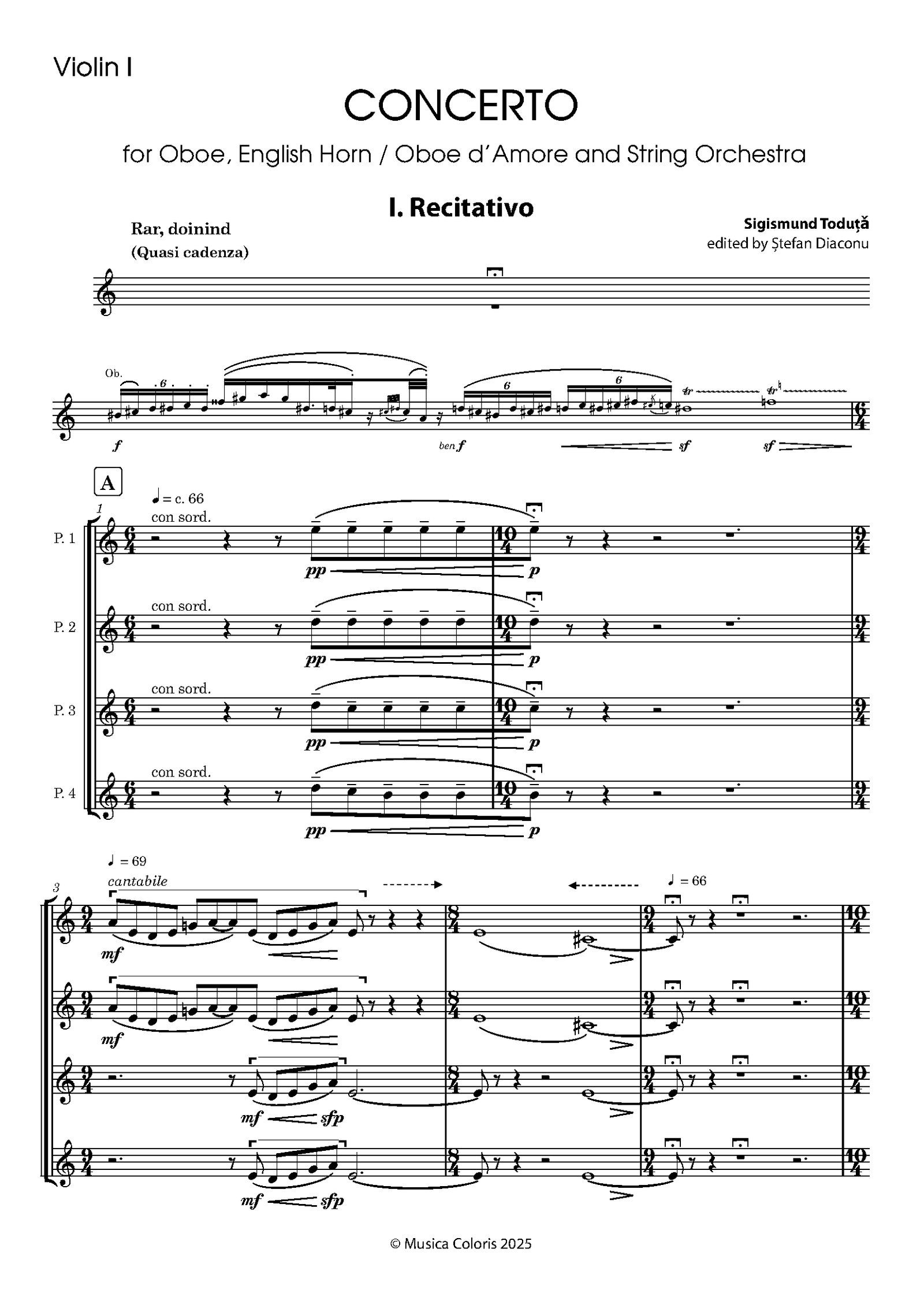
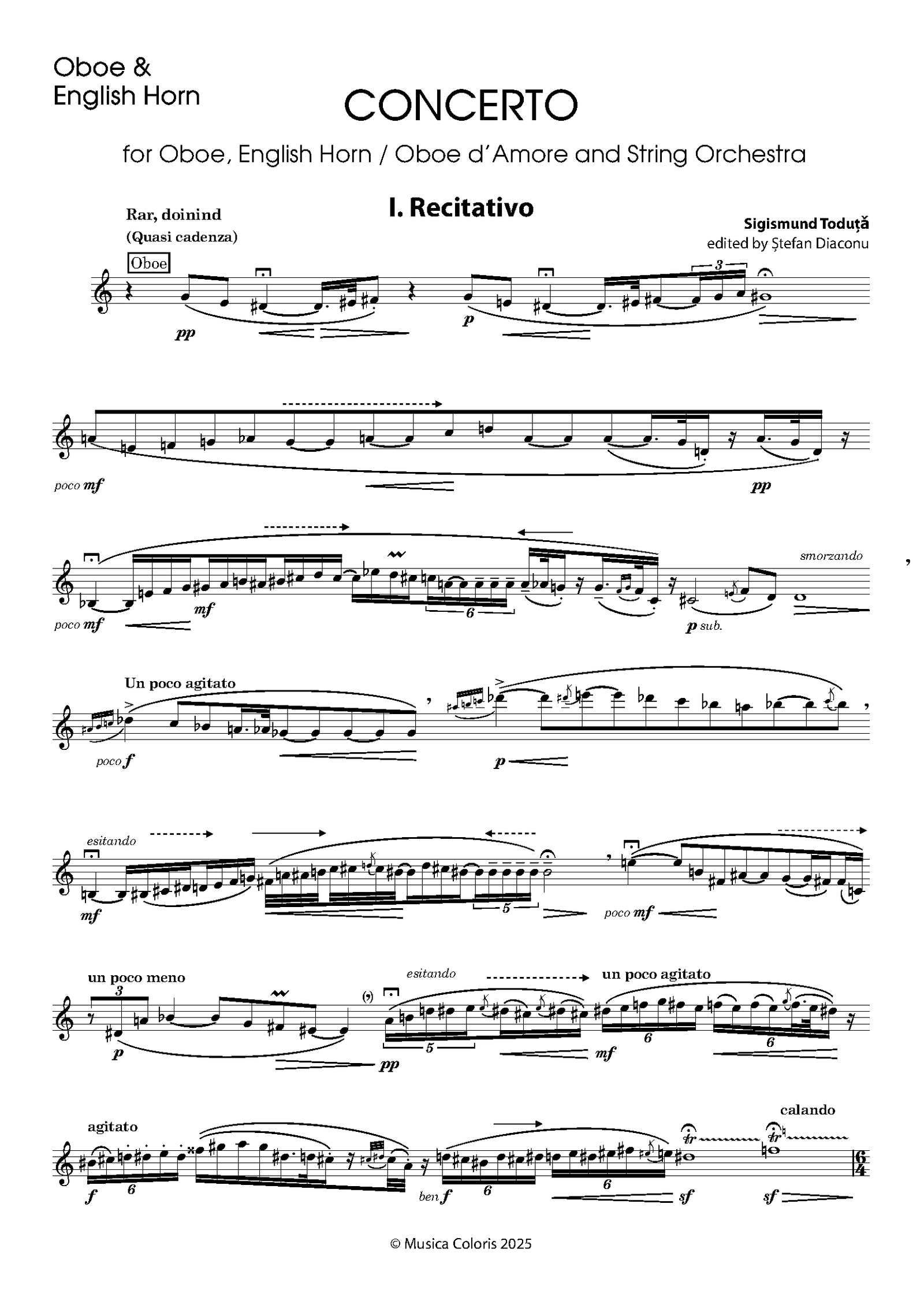
CONCERTO for Oboe, English Horn, and String Orchestra
- The first modern Urtext edition, based on manuscripts
- Score in format – A4
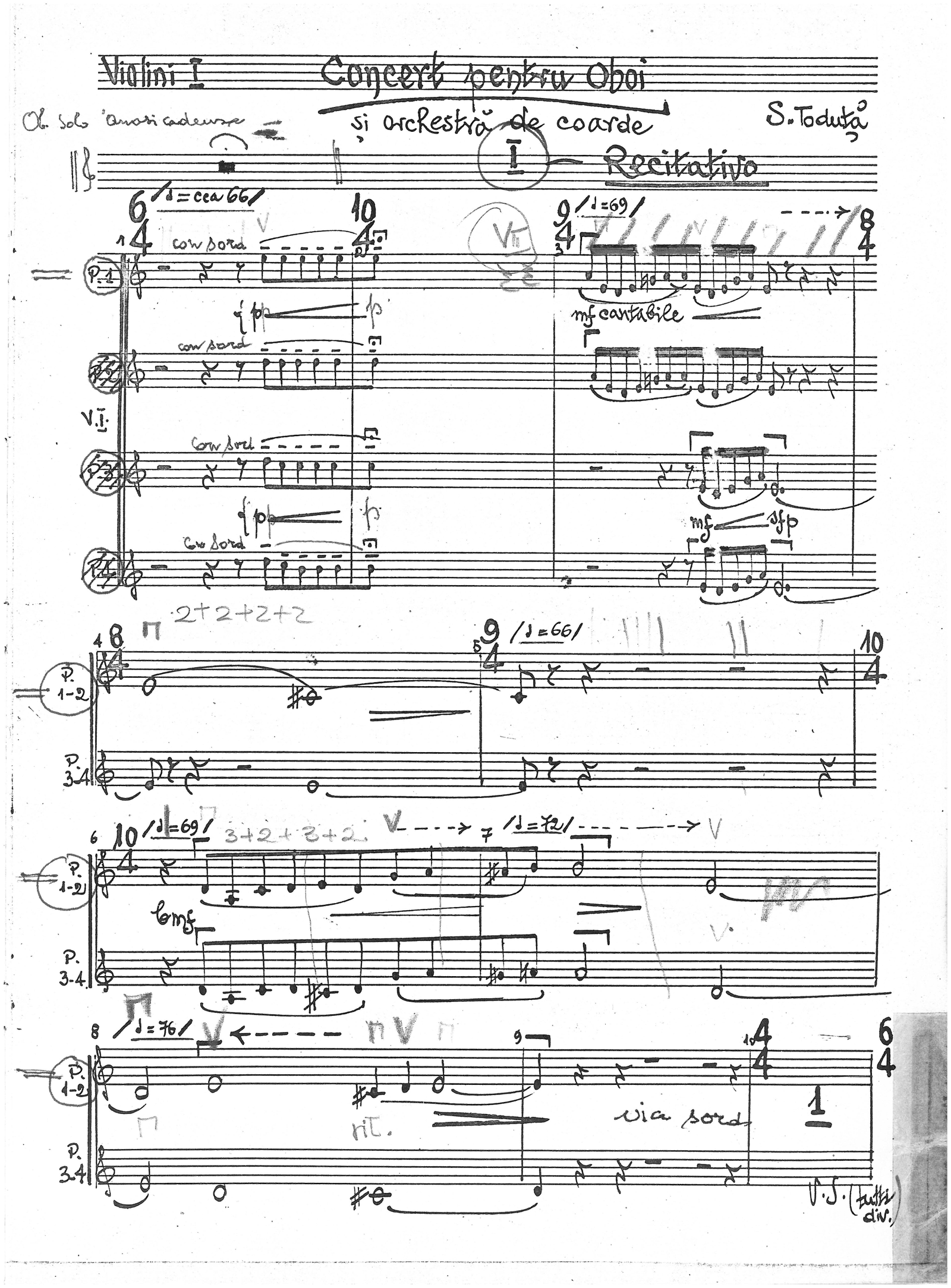
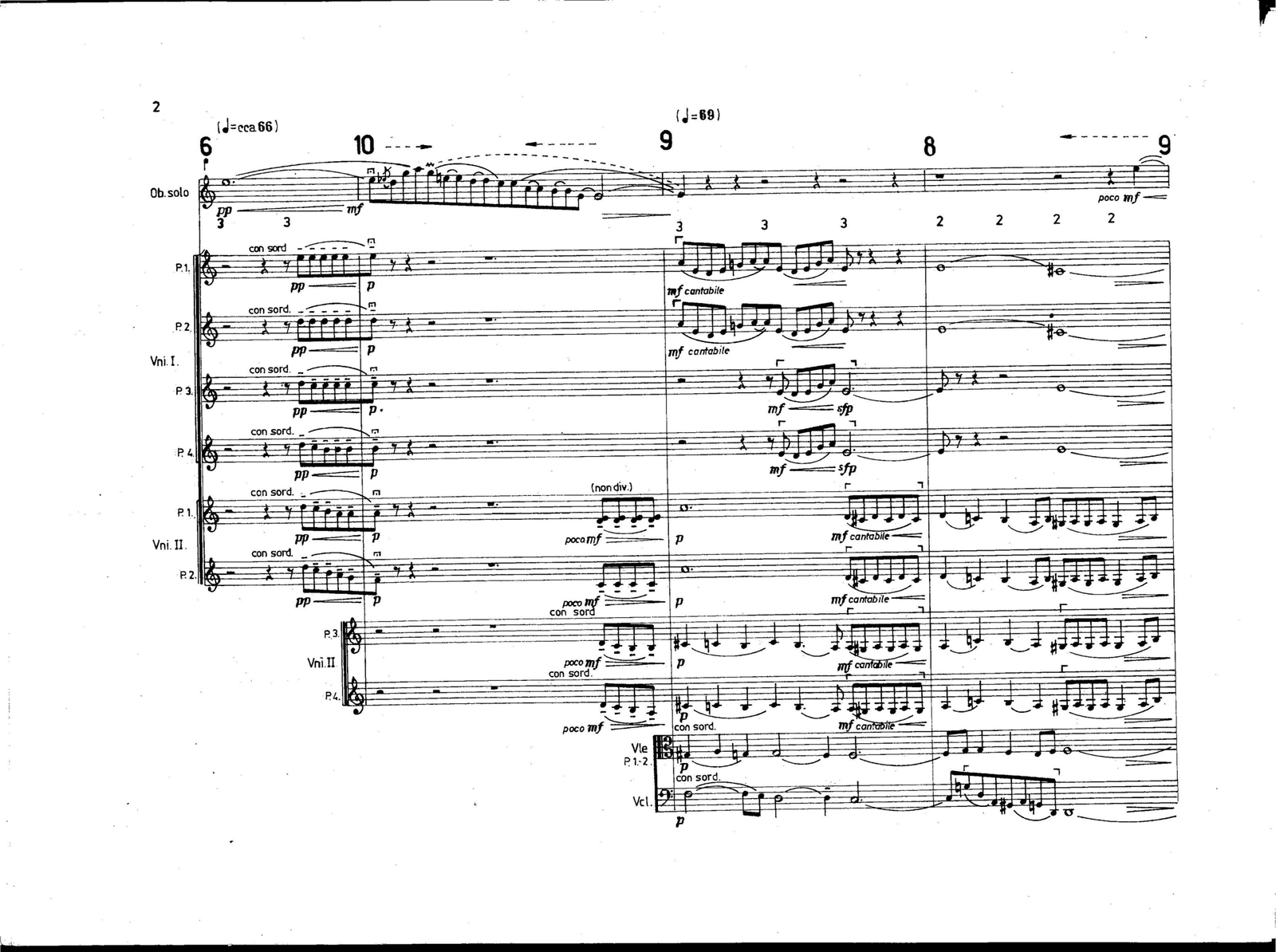
Explore the score history
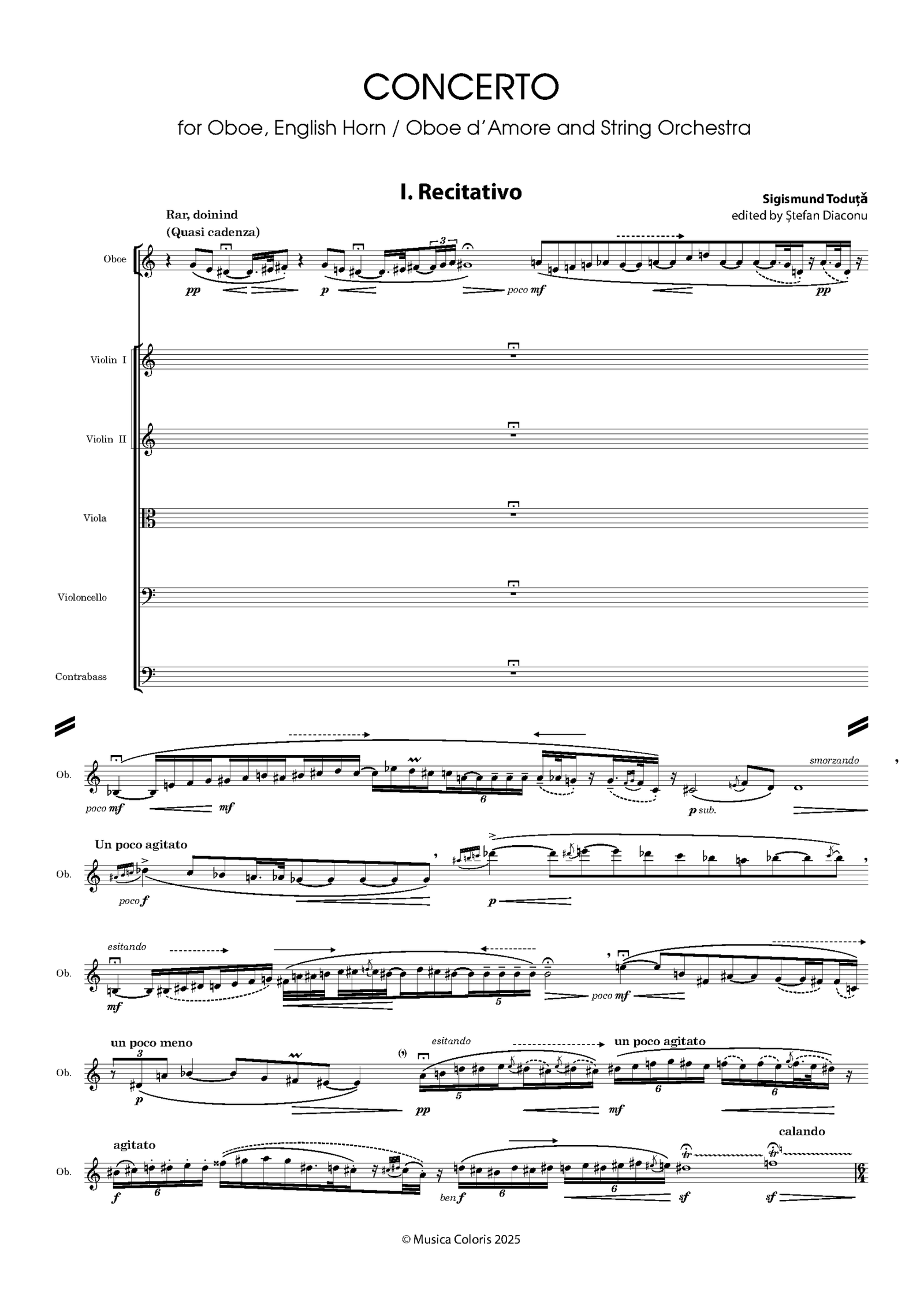
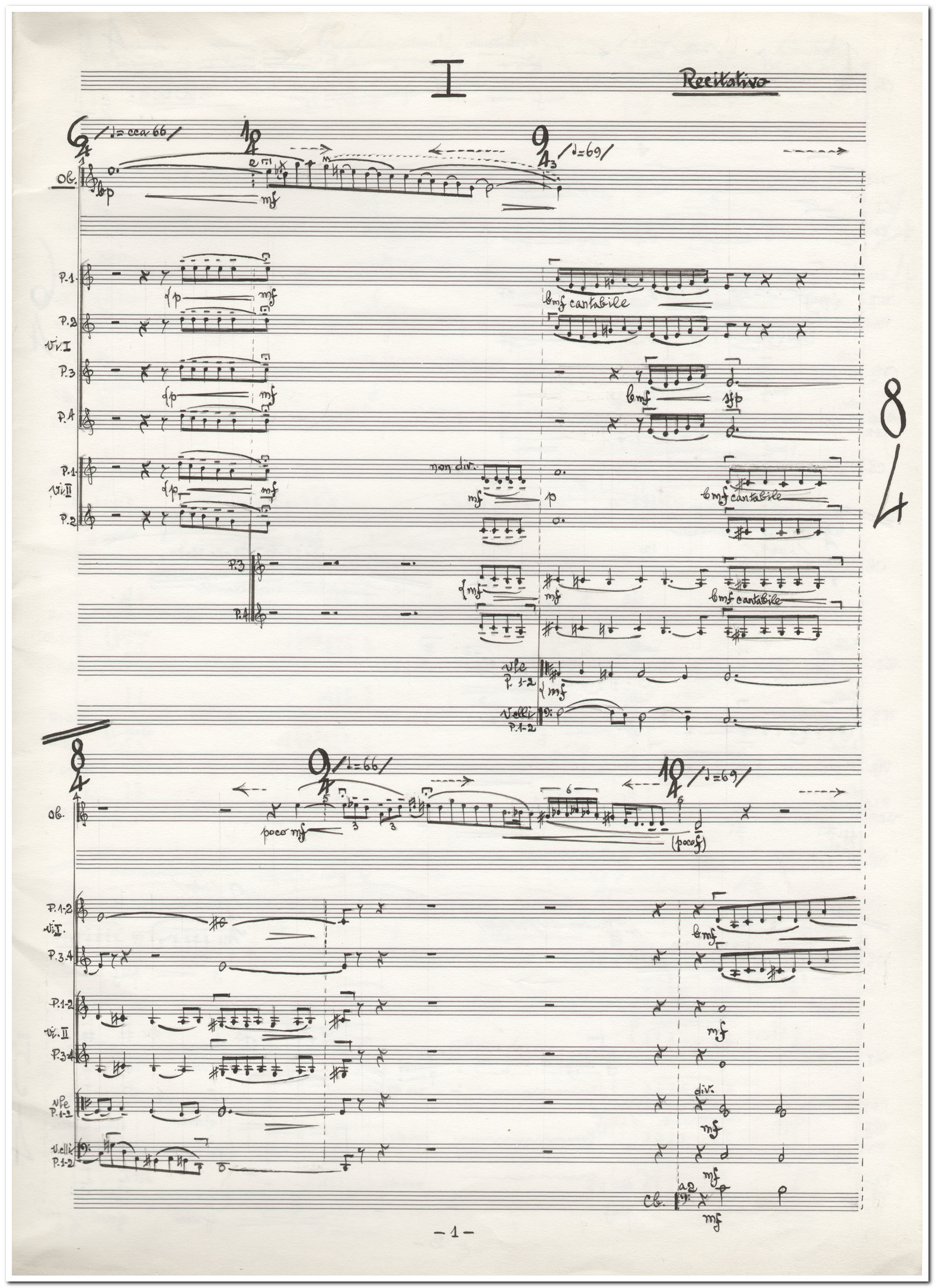
Sigismund Toduță’s interest in the concertante genre resulted in works for solo instruments such as piano, flute, and oboe, as well as string orchestra concertos written in a neobaroque style. Among them stands the Concerto for oboe and string orchestra, composed between 1985 and 1989 and dedicated to oboist Aurel Marc. The piece underwent two stages: an initial version premiered in 1986 in Satu Mare, and a revised version performed in 1989 in Cluj-Napoca. The current score is a reissue of the final version, published in 2001 by Arpeggione.
The concerto features a nontraditional structure: Recitativo – Arioso – Finale, emphasizing slow tempos and a lyrical, quasi-improvisatory character. The first movement opens with a long oboe cadenza, echoing Toduță’s earlier works. The second movement allows the soloist to choose between English horn and oboe d’amore, highlighting their soft and intimate tone. The final movement contrasts sharply with the previous meditative mood, bringing exuberant energy and virtuosic flair to the conclusion.
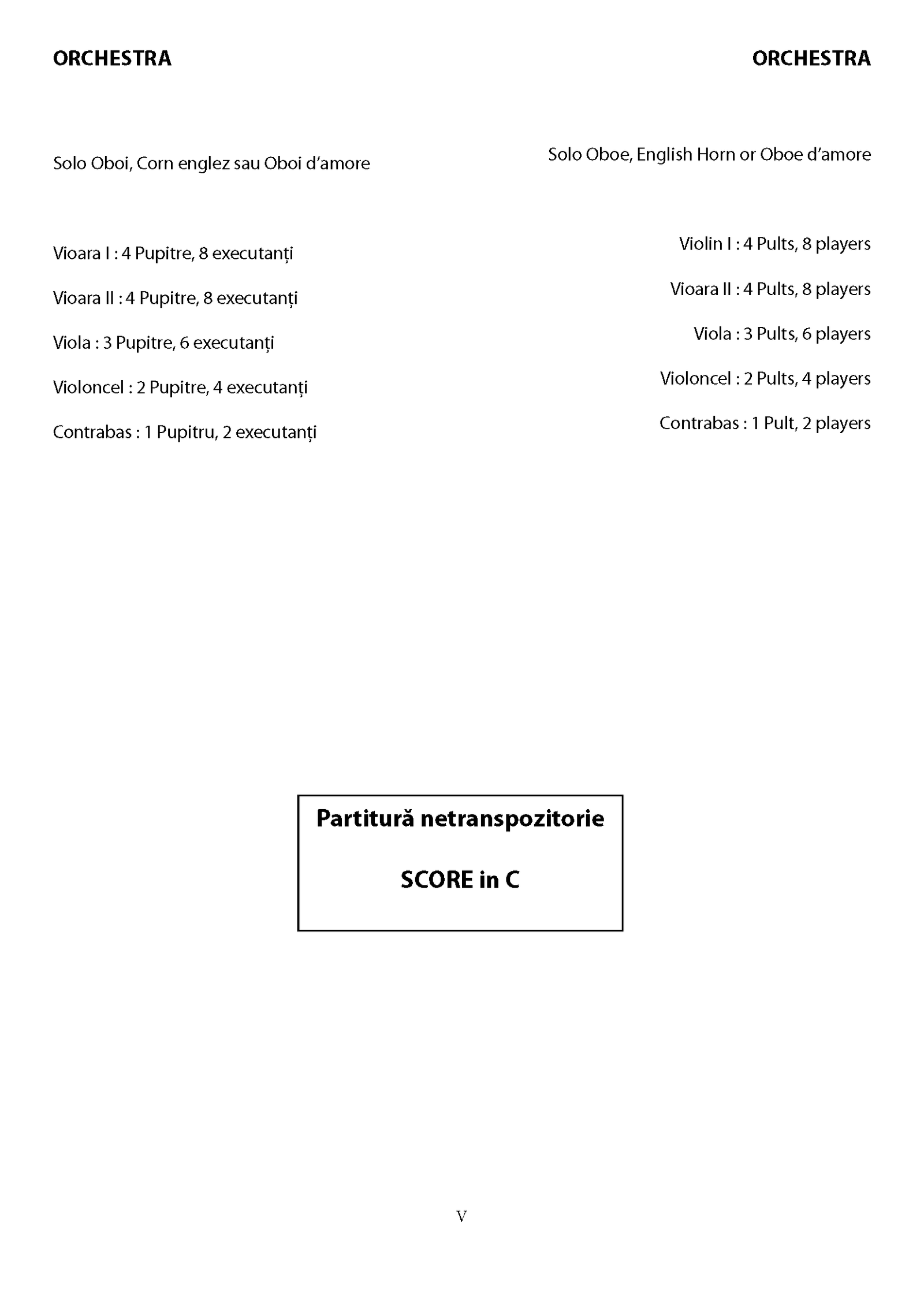
Detailed scoring
Solo Oboe, English Horn or Oboe d’amore
Violin I : 4 Pults, 8 players
Vioara II : 4 Pults, 8 players
Viola : 3 Pults, 6 players
Violoncel : 2 Pults, 4 players
Contrabass : 1 Pult, 2 players
Sigismund Toduță’s interest in the concertante genre resulted in works for solo instruments such as piano, flute, and oboe, as well as string orchestra concertos written in a neobaroque style. Among them stands the Concerto for oboe and string orchestra, composed between 1985 and 1989 and dedicated to oboist Aurel Marc. The piece underwent two stages: an initial version premiered in 1986 in Satu Mare, and a revised version performed in 1989 in Cluj-Napoca. The current score is a reissue of the final version, published in 2001 by Arpeggione.
The concerto features a nontraditional structure: Recitativo – Arioso – Finale, emphasizing slow tempos and a lyrical, quasi-improvisatory character. The first movement opens with a long oboe cadenza, echoing Toduță’s earlier works. The second movement allows the soloist to choose between English horn and oboe d’amore, highlighting their soft and intimate tone. The final movement contrasts sharply with the previous meditative mood, bringing exuberant energy and virtuosic flair to the conclusion.
Solo Oboe, English Horn or Oboe d’amore
Violin I : 4 Pults, 8 players
Vioara II : 4 Pults, 8 players
Viola : 3 Pults, 6 players
Violoncel : 2 Pults, 4 players
Contrabass : 1 Pult, 2 players
| Title | CONCERTO for Oboe, English Horn, and String Orchestra |
|---|---|
| Editor | Stefan Diaconu |
| Score study | Oana Andreica |
| Languages of the text | English, Romanian |
| Instruments | English Horn, Oboe, Oboe d’amore |
| Duration (approx.) | 17 min |
| Number of pages | 55 |
| Page format | A4 |
| Scoring | Chamber music |
| Score Type | Original |
| Product format | 01. Full score, 02. Parts, 03. Full score and Parts, 05. Solo part |
| Publishing Date | 27.10.2024 |
| Publisher | Musica Coloris Edition |
| Edition number | MC 08.1.20.14 |
| Manufacturer Identification | Editura Musica Coloris, CUI 51641026, Butimanu nr. 545, jud. Dâmbovița, postal code : 137075 |
| Availability | Digital (download) |
| Remark |


